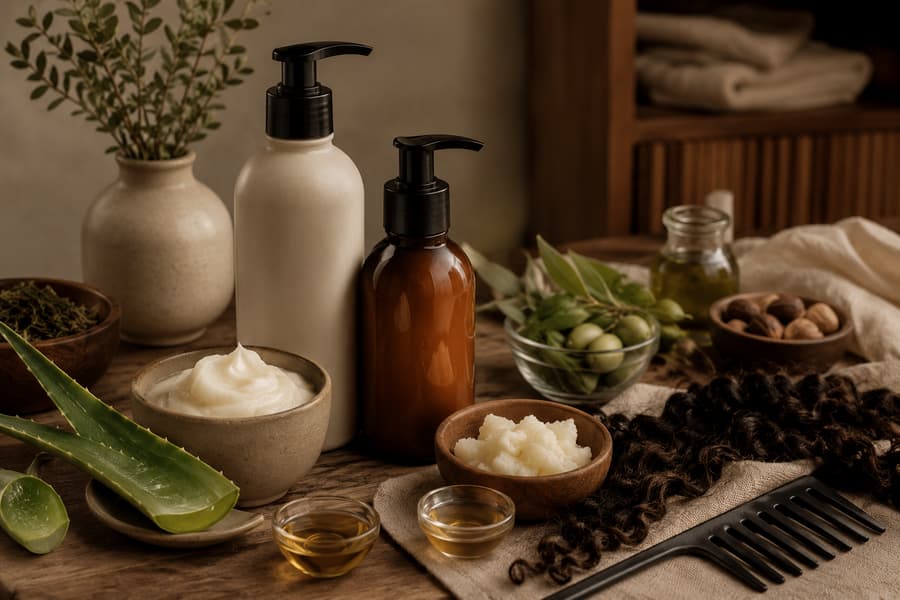
Conditioner ingredients for curls can help you understand why one formula makes hair soft and defined while another leaves it flat, frizzy, or coated. Curly hair needs products that support moisture, slip, strength, and manageability. Ingredient lists can feel confusing, especially when marketing promises all sound similar. A better approach focuses on what your hair needs most. Does it need more hydration, easier detangling, less buildup, or stronger frizz control? A practical curl ingredient resource helps connect labels with real results. You do not need to memorize every ingredient to choose better.
Conditioner ingredients for curls matter because curls can respond strongly to formula weight and finish. Some ingredients provide softness and slip. Others add richness, coating, or strengthening support. A useful curly product method helps you judge ingredients by how hair behaves after use. If curls feel silky but collapse, the product may be too heavy. If they feel clean but rough, it may not condition enough. Ingredients give clues, but your hair’s response provides the final answer.
Conditioner ingredients for curls should often support slip because detangling is a major part of curly hair care. Slip helps strands glide apart with less pulling. A practical detangling product plan looks for formulas that spread easily and soften knots quickly. You can test this in the shower. If the conditioner disappears without helping tangles, it may not offer enough slip. If it makes hair feel coated but still tangled, the balance may be wrong. Good slip protects texture and patience.
Curls often need moisture, but some hair also benefits from strengthening support. A thoughtful curl strength balance considers whether hair feels mushy, brittle, limp, or rough. Moisturizing ingredients can improve softness. Strength-supporting ingredients can help hair feel more resilient. Too much of either direction can create issues. The right balance depends on hair history, color treatments, heat use, and texture. Choosing the Right Conditioner for Curly Hair helps make these product decisions more practical.
Conditioner ingredients for curls should match how easily your hair gets weighed down. Fine curls may prefer lighter conditioning agents and less heavy oil. Thick, coarse curls may need richer ingredients. A useful lightweight curl care approach focuses on movement. After rinsing, curls should still spring, separate, and respond to styling. Heavy does not always mean better. A product can be rich and useful, or rich and flattening. The difference depends on your hair.
Conditioner ingredients for curls can build up when formulas are too heavy or cleansing is not strong enough. Buildup may make hair look dull, feel waxy, or resist water. A smart buildup prevention routine includes watching how hair behaves over time. If a conditioner worked once but now feels heavy, the issue may be accumulation. Clarifying occasionally or switching formula weight can help. Conditioner should improve curl behavior across multiple wash days, not only on day one.
Ingredients become less intimidating when you connect them with results. Track softness, slip, definition, buildup, and frizz. For conditioner selection, read the Curly Hair Conditioner article. For wash day rhythm, continue with the Curly Hair Care Routine article. For moisture-focused choices, explore the Moisturizing Conditioner for Curls article. The Choosing the Right Conditioner for Curly Hair resource helps make ingredient choices more useful for real curls.


Leave a comment